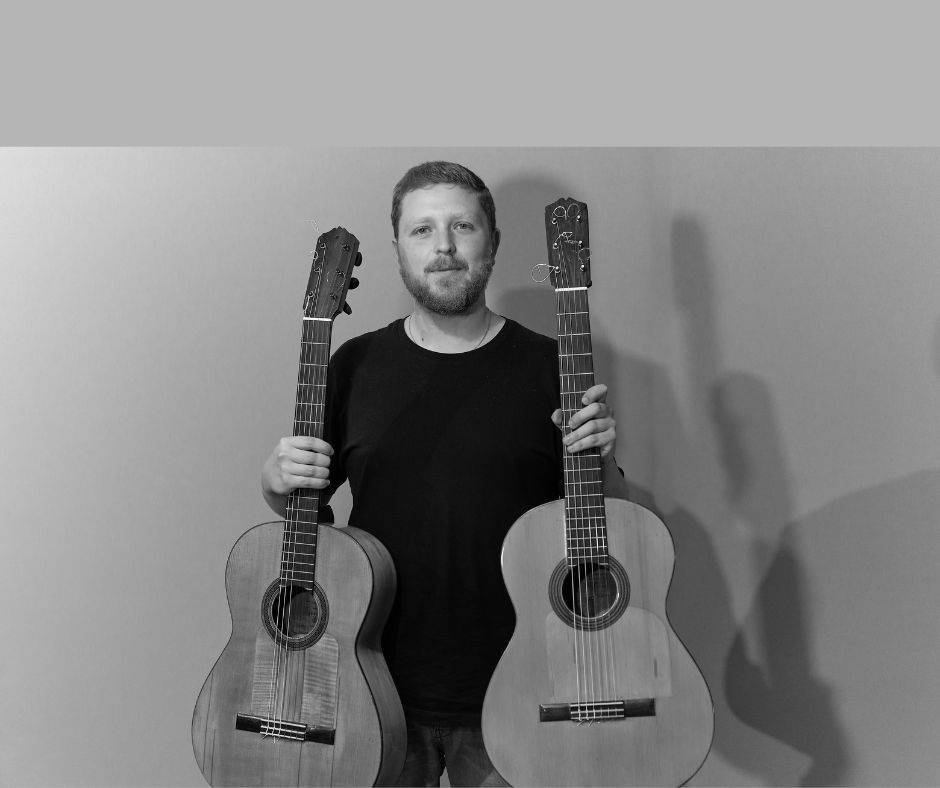
ALEJANDRO HURTADO: "Masters of Classical Flamenco Art"
Alejandro Hurtado presents us with his magnificent interpretations of two of the great masters of flamenco guitar: Ramón Montoya and Manolo de Huelva.
In addition to his exceptional way of interpreting this music, this recording provides us with another interesting document: for the first time, we can listen, with the quality that current recording systems allow, to the original instruments that these two guitarists used for most of their careers.
These are two exceptional instruments, built by Santos Hernández in 1916 (in the workshop of Viuda de Manueo Ramírez) for Montoya and in 1937 for Manolo de Huelva. Both guitars have been in the possession of the Zayas family since the passing of their respective owners, and this is the first time they have authorized their use for a recording.
Alejandro has selected five pieces from each of the performers. From Montoya, he interprets five of his most interesting compositions, including his celebrated Rondeña, for which he provides an unparalleled version. In the case of Manolo de Huelva, a guitarist who always refused to perform solo and only conceived the flamenco guitar as an accompanying instrument, Hurtado has made his own selection of different falsetas (variations) which he has combined to create five of the most classic flamenco styles (Soleares, seguiríyas, alegrías, serrana, and bulerías), presenting them as true concert pieces.
Only a guitarist with the sensitivity and technique of Alejandro Hurtado, qualities that must be coupled with his deep knowledge of the repertoire of the flamenco guitar classics, could rescue the styles of these two guitarists while respecting each one's unique style and adapting to the characteristics of each guitar, all while imparting his personal interpretation of the music.
In the mid-1930s, Marius de Zayas decided to support Ramón Montoya by producing a series of recordings and promoting his artistic career. Similarly, he acted with Manolo de Huelva, recording a historic video accompanying "La Argentinita" in dance. His wife, Virginia Randolph Harrison, worked closely with Manolo de Huelva for years, transcribing all of the brilliant musician's falsetas into musical notation.
The relationship with the Zayas family continued until the passing of both artists. This explains why their instruments became the property of the Zayas family. After Marius's passing, the instruments were entrusted to his son, Rodrigo de Zayas, who has maintained them in perfect condition to this day. Undoubtedly, one of the reasons for their magnificent state of preservation is the care and attention with which they have been treated, as well as the level of protection that has always been maintained. The instruments have rarely left their home and have hardly been played by other guitarists over all these years, for fear they might be damaged.
It undoubtedly took a person with such special talent as Alejandro Hurtado to convince the instrument owners to authorize their use for a recording. Alejandro initially approached the Zayas archive not in search of the guitars, but with the intention of finding Manolo de Huelva's music, knowing that the transcriptions of his falsetas were stored there. After several visits and hearing Alejandro play, both Rodrigo de Zayas and his wife Anne recognized the immense talent of this young guitarist, as well as his outstanding character. They were the ones who offered him the opportunity to use the instruments for a recording.
From the moment Alejandro received this offer, he worked intensively. In just 52 days, of which only two were spent getting acquainted with the original instruments, he designed and prepared the pieces for recording and then entered the recording studio. Aware that the instruments couldn't be kept away from the Zayas home for too long, he recorded the 10 tracks included in this album in just two days. Some of these tracks can be heard recorded in a single take, without any editing, just as it was done in the days of Montoya and Manolo de Huelva. The result is the magnificent work you now hold in your hands.
Involvement in this project has placed Rodrigo de Zayas in a situation similar to what his father did almost a century ago: facilitating the recording of an album that allows us to hear the music of these two great pillars of flamenco guitar on historical instruments but with the sound quality that modern recording systems provide. Alejandro Hurtado delivers versions that remain faithful to the style and playing of the two great masters while adding his personal musical perspective. Although what he aims for, with the humility characteristic of great artists, is that new generations will once again listen to and appreciate the music of the old masters as much as he does.
Pablo Barón, Professor of Classical Guitar
LISTEN
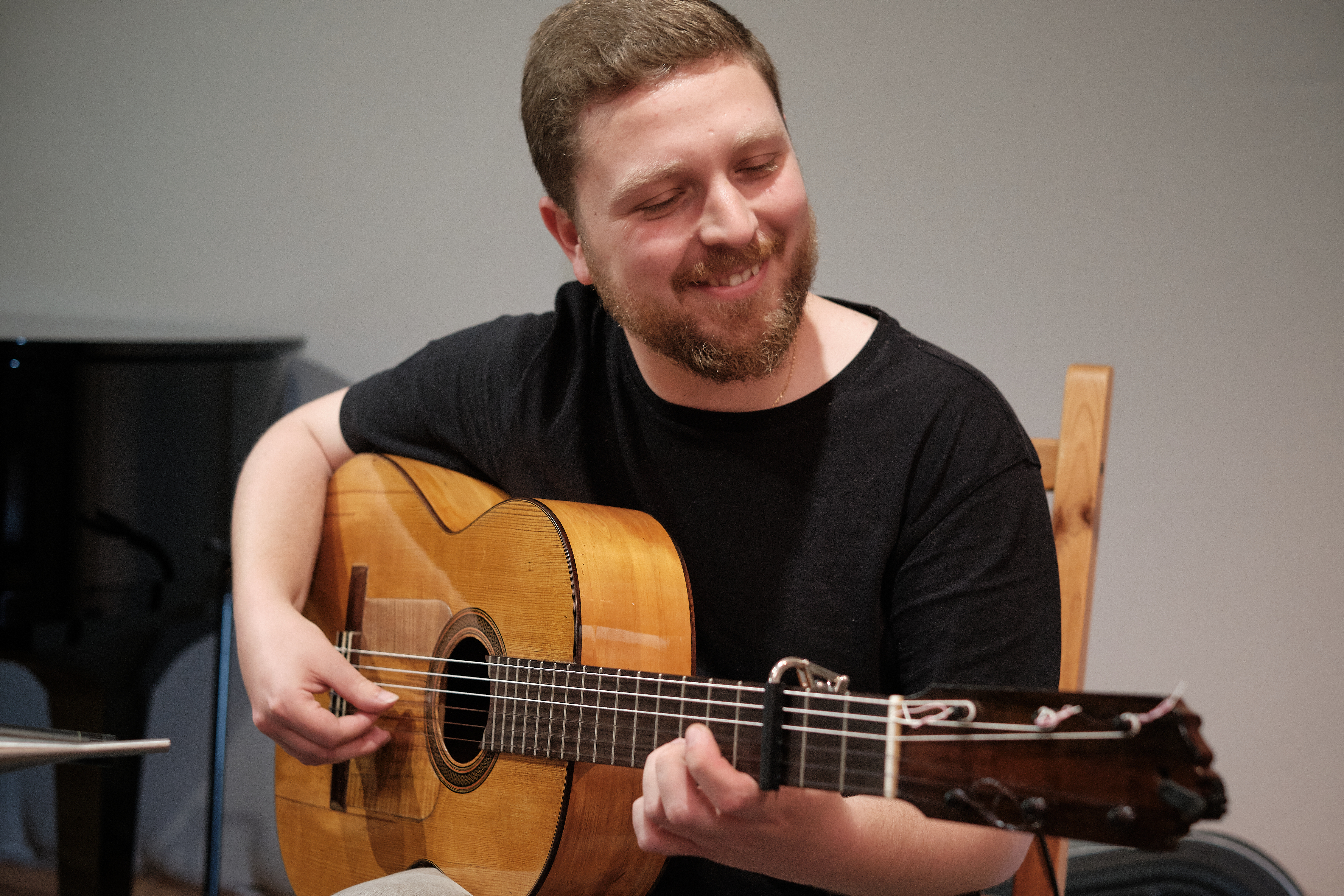
Ramón Montoya, Tangos
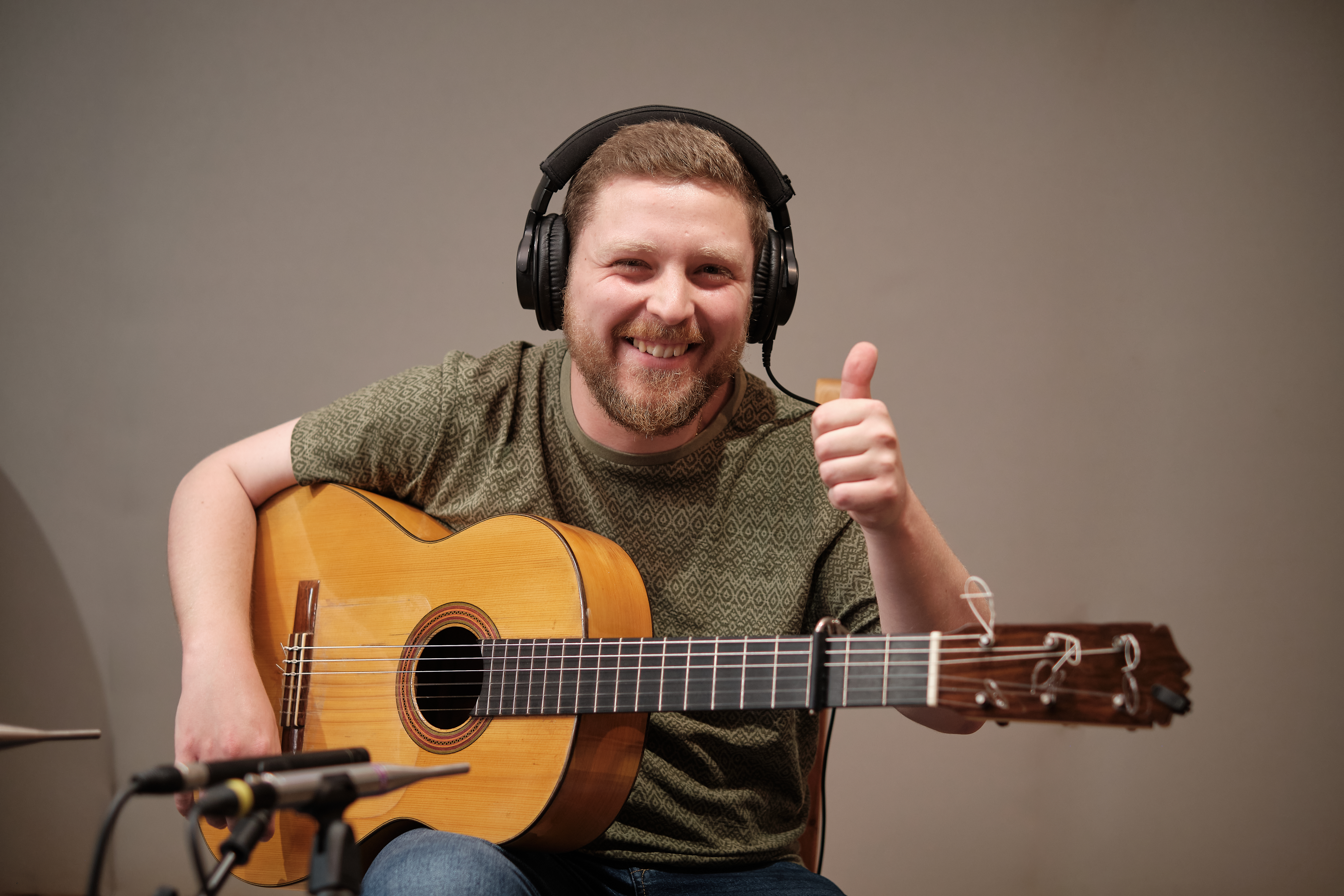
Manolo de Huelva, Seguiriya
BUY